Your garage door springs do the heavy lifting every time the door goes up or down. They carry the full weight of the door, and when one starts to fail, the whole system feels it. Catching the early signs of a broken garage door spring can save you from a door that suddenly won’t open, a surprise repair bill, or a safety hazard in your garage. Springs are under extreme tension, so this is one repair that belongs with a trained professional rather than a weekend project. Here are five signs that your spring is wearing out and needs attention before it gives way completely.
1. Your Garage Door Feels Heavy or Won’t Open
A properly balanced door should glide up with little effort. When a spring breaks or loses tension, that balance is gone, and the door suddenly feels like it weighs a ton. If you have an automatic opener, it may strain, struggle partway, or refuse to lift the door at all. The opener is built to guide the door, not to haul its full weight, so forcing it can burn out the motor.
If your door won’t budge or feels dramatically heavier than usual, stop using it and call for professional torsion spring replacement. Continuing to operate a door with a failing spring risks damage to the opener and other hardware.
2. You Hear a Loud Bang From the Garage
A breaking torsion spring often makes a sharp, startling noise, sometimes described as a loud bang or a firecracker-like snap. That sound is the stored energy releasing all at once as the coil fails. Many homeowners hear it from inside the house and find the door won’t work when they check.
If you heard a loud noise and now the door is acting up, a broken spring is the likely cause. Don’t try to inspect or handle the spring yourself. The tension involved can cause serious injury.
3. You See a Visible Gap in the Spring
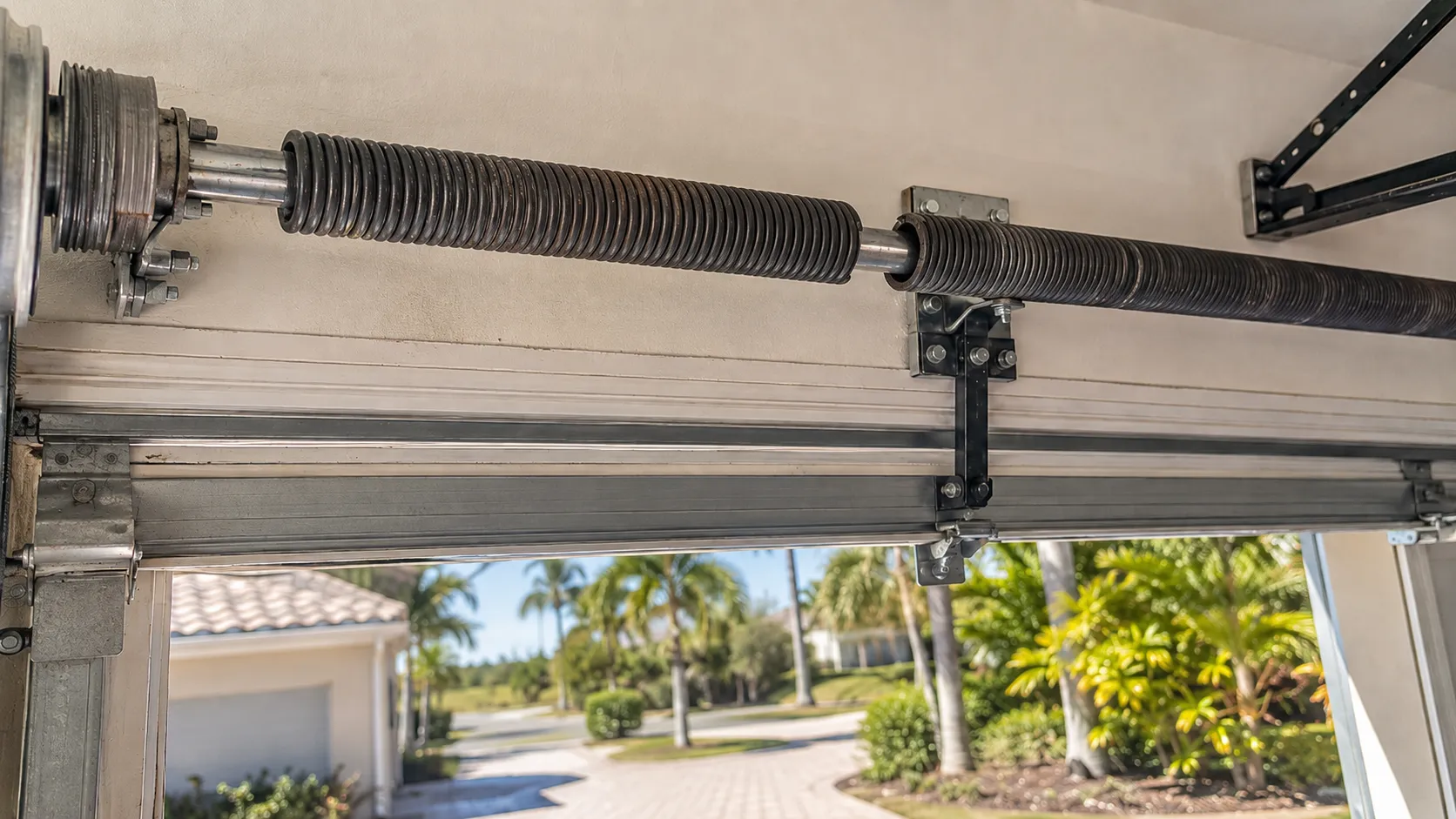
Torsion springs sit on a metal shaft above the door opening. When one breaks, you can often see a clear two- to three-inch gap where the coil separated. Extension springs, which run along the tracks on either side of the door, may show stretching, sagging, or a snapped section instead.
A quick visual check from the ground can confirm the problem, but that’s where the DIY part ends. Replacing or adjusting the spring is a job for our experienced technicians, who have the tools and training to do it safely.
Torsion vs. Extension Springs
Most South Florida homes use one of two spring types. Torsion springs mount horizontally above the door and are known for smooth, controlled movement and a longer service life. Extension springs run parallel to the tracks and are more common on older or lighter doors. Both wear out over time, and both should be serviced by a professional. If you’re not sure which type you have, our team can identify it and recommend the right replacement.
4. The Door Opens Crooked or Slams Shut
When one spring in a two-spring system fails, the door can lift unevenly, looking crooked or catching in the tracks. You might also notice the door dropping faster than normal or slamming down hard when it closes. Both are signs the springs are no longer supporting the weight the way they should.
A door that closes too quickly is a safety concern, especially in a busy household. If your door is moving unevenly or coming down harder than it used to, schedule a professional inspection before the problem gets worse. This is also a good moment to consider preventive garage door maintenance, which can catch a weakening spring before it fails.
5. Loud Squeaking, Grinding, or Rust on the Coils
Springs don’t always fail without warning. Often they get noisy first. Squeaking, grinding, or a rough scraping sound during operation can mean the coils are worn, poorly lubricated, or corroding. South Florida’s humidity and salt air are hard on metal hardware, and rust weakens a spring long before it snaps.
If you see rust building on the coils or hear new noises when the door moves, treat it as an early warning. A worn spring caught early is a simpler fix than one that has already broken and left you with a stuck door.
Why South Florida Homes Are Tough on Garage Door Springs
The local climate plays a real role in how long springs last here. High humidity and coastal salt air accelerate corrosion on metal components, and year-round use means the springs cycle constantly with no off-season. Homes closer to the coast tend to see faster wear.
None of this means your springs are doomed to fail early. It does mean regular inspections and good maintenance matter more in this environment than in a drier climate. Keeping an eye on the signs above, and scheduling a tune-up when something feels off, helps you get the most life out of your hardware.
When to Call a Professional
Garage door springs store an enormous amount of tension, and a spring that lets go can cause serious injury or property damage. This is not a repair to attempt yourself, even if you’re handy. The safest move when you spot any of these warning signs is to stop using the door and bring in a trained technician.
Our team handles spring replacement across South Florida every day, from diagnosis to a safe, correct fix. If your door is showing symptoms, we can inspect the whole system, replace worn springs, and check the balance and hardware while we’re there. You can also review our full range of professional garage door repair services if you’re dealing with more than just a spring.
Frequently Asked Questions
Can I still open my garage door with a broken spring?
You should avoid it. A door with a broken spring is extremely heavy and can fall unexpectedly, which is a serious safety risk. Forcing an automatic opener to lift it can also damage the motor. It’s best to stop using the door and schedule service.
How long do garage door springs last in South Florida?
Spring life is usually measured in cycles rather than years, and typical springs are rated for a set number of open-and-close cycles. In South Florida, humidity and salt air can shorten that lifespan through corrosion. Regular maintenance and inspections help you get the most out of them.
Should I replace one spring or both?
If your door uses two springs and one has failed, many homeowners choose to replace both. The second spring is usually the same age and close to the end of its life, so replacing both can save a repeat service call. Our technician can advise you based on the condition of your hardware.
Is a broken spring an emergency?
It can be, especially if the door is stuck in a position that blocks your vehicle or leaves your garage unsecured. Because of the safety risks involved, it’s worth addressing quickly. If you need fast help, you can schedule a garage door repair and we’ll get someone out to assess it.
Noticing the Signs of a Failing Spring?
If your garage door is heavy, noisy, uneven, or showing rust on the springs, don’t wait for it to fail completely. The Door Doctor of South Florida can inspect your door, replace worn springs safely, and get everything back to smooth operation. Schedule service and our experienced technicians will take care of the rest.