A broken garage door spring is not just an inconvenience—it can create serious safety risks. Your garage door is one of the most important parts of your home, offering both convenience and security. At the heart of the system are the garage door springs, which counterbalance the heavy weight of the door so it can open and close safely. When these springs start to wear out, your door may become unsafe or stop working altogether.
In this article, we’ll cover the top warning signs that your springs are about to fail, explain what causes spring issues, and show you when to call for professional garage door repair services.
Signs Your Garage Door Spring is About to Break
1. Garage Door Feels Heavy
A healthy spring system makes your garage door feel light when opening by hand. If it suddenly feels heavier than usual, the springs are likely wearing down. This is one of the earliest signs that you may need garage door spring repair.
2. Door Opens Unevenly or Jerks
When one spring is damaged, your door may lift unevenly, appearing crooked or jerky as it moves. Left unaddressed, this can also affect rollers or tracks. Scheduling routine maintenance helps catch this early and prevent more serious issues.
3. Loud Noises from a Broken Garage Door Spring
A failing spring often makes loud creaks or squeaks when opening or closing. If you hear a sudden, sharp “snap,” the spring has likely broken completely. In these cases, you’ll need emergency garage door repair. Schedule service or call The Door Doctor at 954.491.0039 to restore safe operation.
4. Visible Gaps or Rust in the Springs
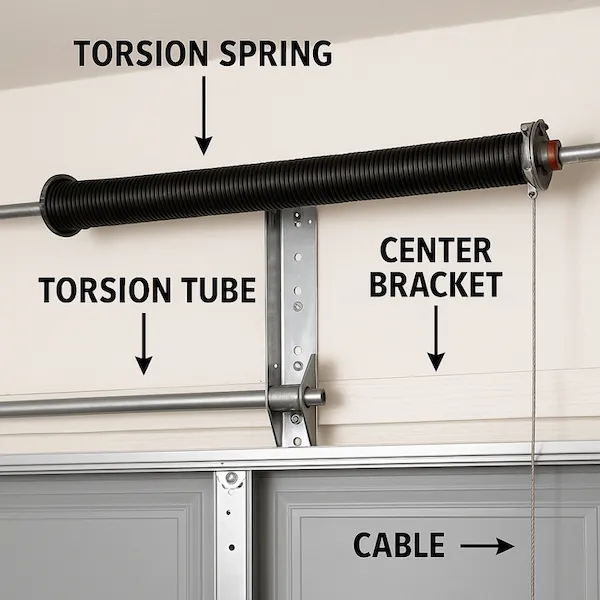
Inspect your torsion springs above the door. A noticeable gap in the coil, stretching, or rust are all warning signs. If you notice this, call for broken garage door spring replacement before it fails completely.
5. Door Slams Shut Suddenly
Springs prevent your garage door from crashing down. If it slams shut or lowers too quickly, the springs are no longer functioning properly. This is both dangerous and damaging to your system—book a professional tune-up right away.
6. Opener Struggles or Stops Working
Your opener isn’t built to lift the full weight of the door. When the springs lose tension, the opener may strain or stop working. In this case, you’ll likely need garage door opener repair in addition to spring service.
7. Door Won’t Stay Open on Its Own
Lift your door halfway and let go. If the springs are in good condition, it should hold steady. If it drops, your springs are weak—schedule routine maintenance to prevent further wear or failure.
What To Do if Your Garage Door Spring Breaks
If your spring breaks, do not try to operate the door. It can cause serious damage to the opener, cables, and tracks—and poses a major safety risk. Always call a professional for same-day repair if your spring has snapped.
Preventing Spring Problems with Regular Maintenance
Most garage door springs last around 10,000 cycles (about 7–10 years). Regular tune-ups extend their lifespan and catch small problems early. Routine care ensures your system stays balanced, lubricated, and safe to operate.
Other Garage Door Problems to Watch For
Spring issues often overlap with other common repairs, such as:
- Garage Door Cable Repair – when cables fray or snap
- Roller Replacement – worn or damaged rollers cause noise and uneven movement
- Garage Door Sensor Troubleshooting – faulty sensors can stop the door from closing
- Remote Programming – remotes or keypads that stop responding
Final Thoughts
Your garage door springs may be small components, but they play a huge role in safety and performance. Watch for early warning signs—like a heavy door, loud noises, or uneven movement—to prevent accidents and costly damage. Don’t wait for a full breakdown. Call a trusted local expert for garage door maintenance to keep your home secure and your system running smoothly.