Hurricane season brings powerful storms that can strike with little warning, and being prepared is the best way to protect yourself, your home, and your loved ones. Taking time now to create a plan, gather supplies, and secure your property can make all the difference when severe weather hits. From understanding watches and warnings to preparing your home and knowing evacuation routes, readiness ensures you can respond quickly and confidently to keep your family safe.
Watches and Warnings
When a storm approaches, it’s important to understand the alerts issued by the National Weather Service. Watches and warnings provide critical guidance on when conditions may become dangerous, helping you prepare and act in time.
Tropical Storm Watch: Tropical storm conditions are possible within 48 hours.
Tropical Storm Warning: Tropical storm conditions are expected within 36 hours.
Tropical Storm: Sustained winds of 39–73 mph.
Hurricane Watch: Hurricane conditions are possible within 48 hours.
Hurricane Warning: Hurricane conditions are expected within 36 hours.
Hurricane: Sustained winds of 74 mph or higher.
Saffir-Simpson Hurricane Wind Scale:
- Category 1: 74–95 mph
- Category 2: 96–110 mph
- Category 3: 111–129 mph
- Category 4: 130–156 mph
- Category 5: 157 mph or higher
Emergency and Evacuation Assistance Program
Not everyone is able to evacuate on their own. The Emergency and Evacuation Assistance Program (EEAP) ensures residents with mobility, medical, or functional needs receive the help they need when an evacuation order is issued.
Residents who preregister with EEAP will receive priority transportation assistance. Eligible participants include those who are homebound, dependent on medical equipment, or without access to transportation. Visit miamidade.gov/hurricane or call 311 to apply.
Community Emergency Response Team
In an emergency, communities are stronger when people are prepared to help. The Community Emergency Response Team (CERT) offers free training in disaster response skills, including fire safety, light search and rescue, and medical operations.
CERT also provides specialized training for extreme weather, such as flooding, hurricanes, and heat waves. To learn more or to register, email cert@miamidade.gov.
Flooding and Extreme Heat
Hurricanes often bring heavy rainfall and dangerous heat conditions. Understanding the risks of flooding and extreme heat can help you stay safe and protect your family.
Flooding
With South Florida’s flat terrain, high water table, and coastal location, flooding can happen even inland. Rainfall, storm surge, and drainage failures can all cause severe flooding.
Extreme Heat
Miami-Dade’s heat season runs from May through October. High heat indexes can be deadly, especially for seniors, children, pregnant women, and those without air conditioning. Always stay hydrated, wear light clothing, and never leave children or pets in cars.
Preparing for extreme heat:
- Locate public places nearby with air conditioning, such as libraries and park facilities
- Insulate your home
- Cover the windows of your home with shades
- Install, repair and maintain efficient air conditioning systems
- Research government programs that offer financial assistance with air conditioning installation and other home cooling options
- Learn the signs of heat-related illnesses
Coping with extreme heat:
- Stay updated on weather reports
- Keep your body cool by wearing lightweight, light-colored clothing and taking cool showers
- Avoid strenuous activities
- Find shade if you’re outside and rest if you’re active
- Drink plenty of fluids, preferably water, to stay hydrated
- Never leave children or pets in a hot car
- Watch for heat cramps, heat exhaustion and heat stroke
- Check on those who are more at risk for heat-related illnesses
For more information on how to stay safe this heat season, visit miamidade.gov/heat.
Tornadoes and Storm Surge
When a hurricane approaches, two of the most dangerous and often underestimated threats are tornadoes and storm surge. While the hurricane itself brings destructive winds and rain, tornadoes can form suddenly with little warning, causing localized but severe damage. Storm surge, on the other hand, is responsible for the majority of hurricane-related deaths. This powerful rise of ocean water can flood coastal and inland areas alike, destroying homes, cutting off evacuation routes, and making survival difficult for anyone who stays behind. Understanding these threats—and knowing your risk zone—is essential to making safe decisions before and during a storm.
Tornadoes
Hurricanes often spawn weak but destructive tornadoes that can cause serious damage.
Storm Surge
This abnormal rise in water is the greatest hurricane threat, capable of reaching over 20 feet and traveling inland through bays and canals.
Notice for High-Rise Residents: If you live in a high-rise building and choose to shelter in place, stay on floors just above flood water or storm surge, but not higher than the 10th floor. Hurricanes bring dangerous winds and the higher up you go in a building, the stronger the wind speed.
Know Your Zone
All Miami-Dade County residents should know which Storm Surge Planning Zone they live in. To determine your zone, go to miamidade.gov/hurricane, view your county on floridadisaster.org, download the Ready MDC mobile app, or call 311.
Upon identification of a threat, each zone (or portions of a zone) will be evacuated depending on the hurricane’s track and projected storm surge, regardless of the storm category.
Notice: A Storm Surge Planning Zone is an area that could be affected by storm surge of 1 ½ feet or higher during a hurricane. These zones are not the same as flood zones.
Zone 1: Risk from Category 1+ storms
Zone 2: Risk from Category 2+ storms
Zone 3: Risk from Category 3+ storms
Zone 4: Risk from Category 4+ storms
Zone 5: Risk from Category 5 storms
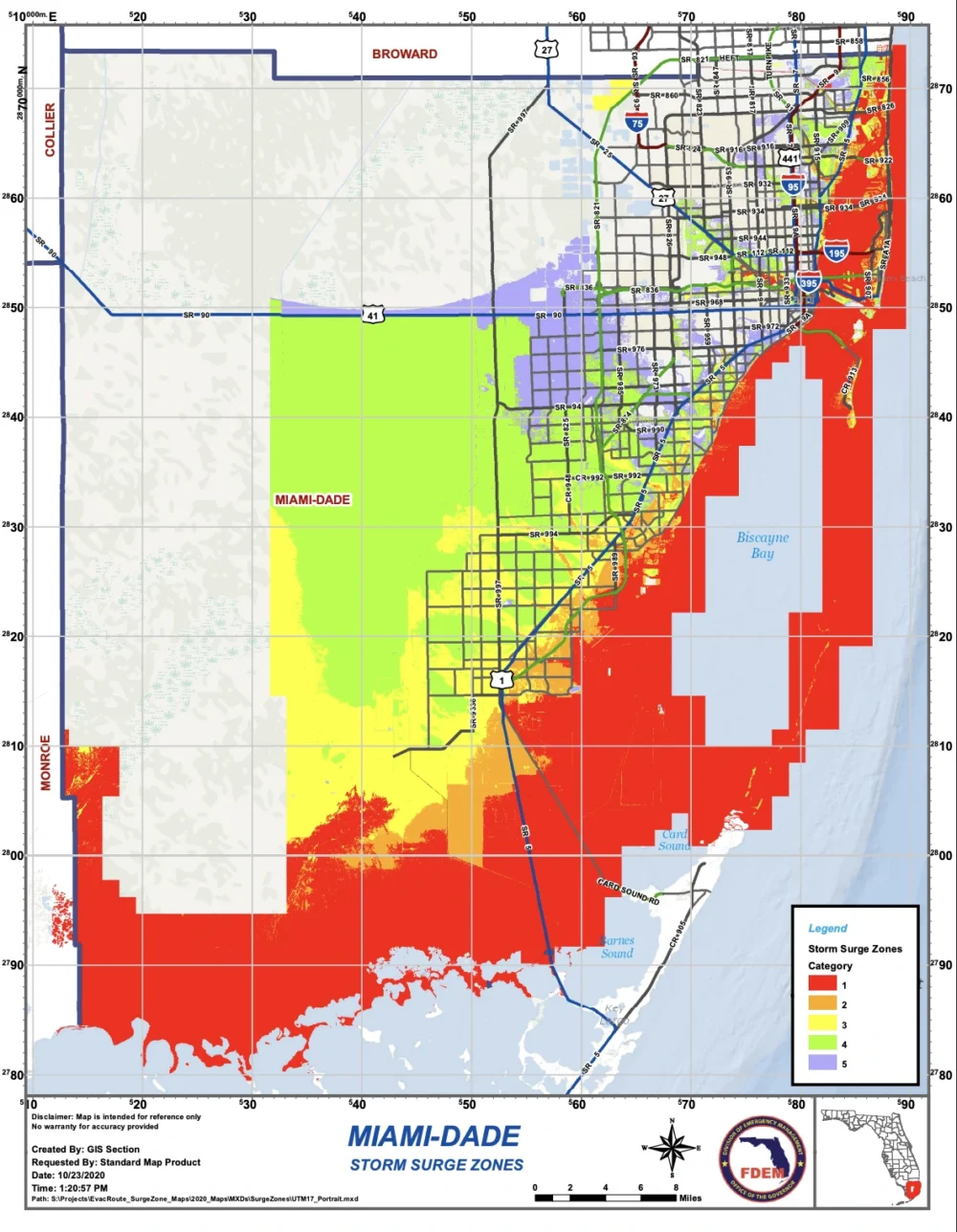
Miami-Dade Storm Surge Zones
Map illustrating potential storm surge zones in Miami-Dade during a hurricane.
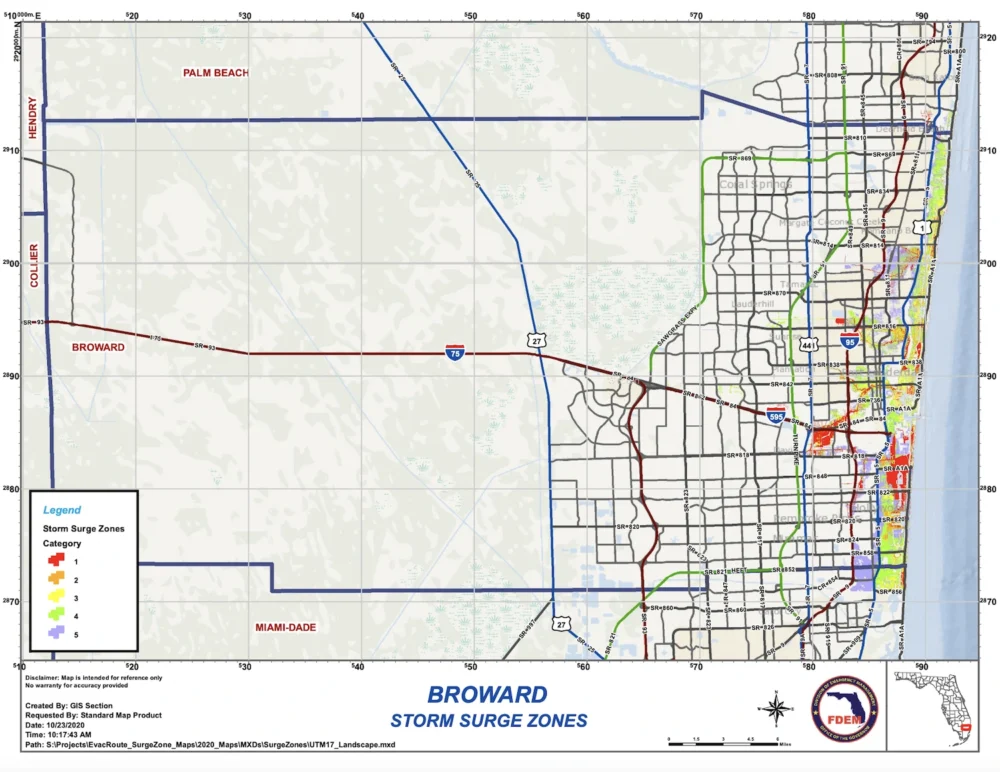
Broward County Storm Surge Map
Detailed map of storm surge zones in Broward County for hurricane preparedness
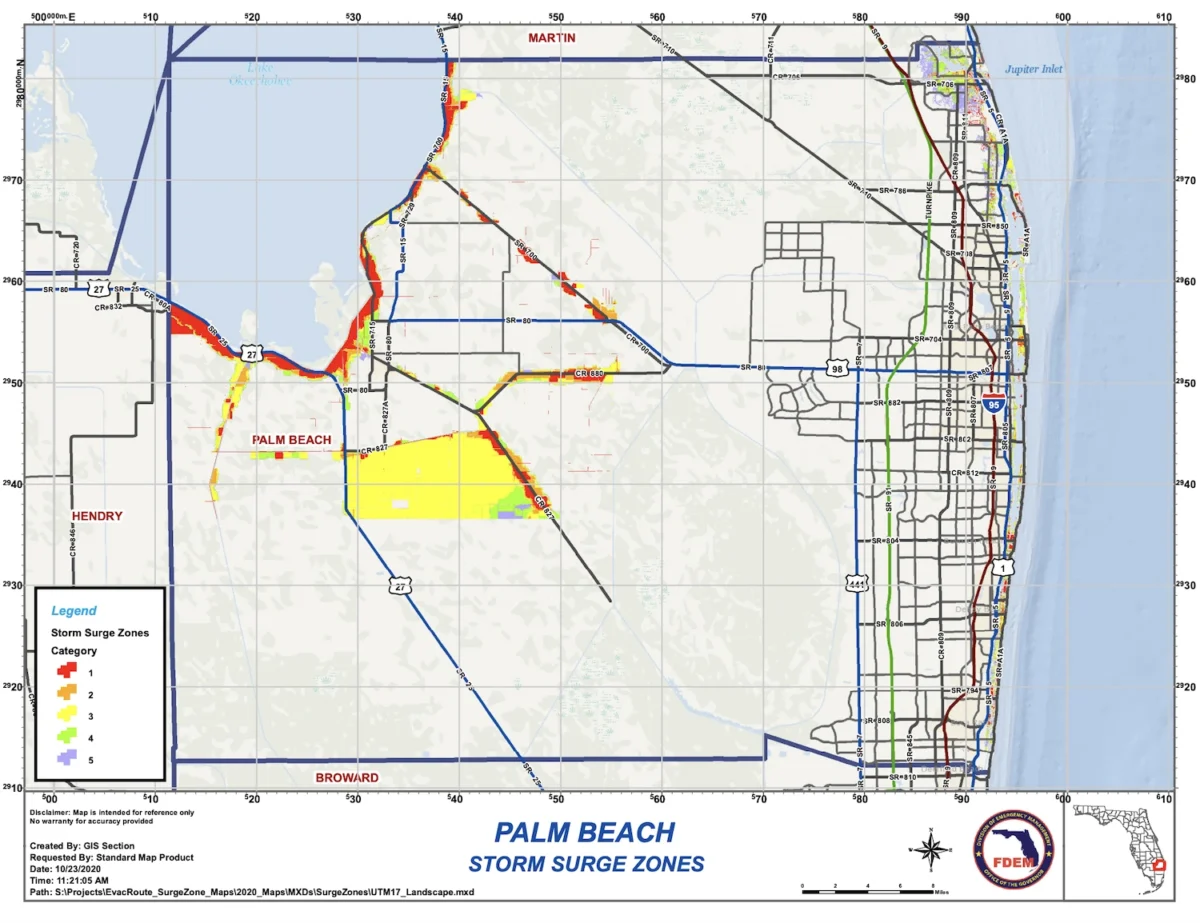
Palm Beach Storm Surge Zones Map
Detailed map of storm surge zones in Palm Beach, highlighting potential hurricane impacts.
Disaster Kit Checklist
Having the right supplies can make the difference during and after a storm. Build a disaster kit in advance and keep it in a waterproof container that’s easy to carry, like a backpack or duffle bag.
- One gallon of water per person, per day (3–7 days)
- Non-perishable food and a manual can opener
- Prescription medications and hygiene items
- Bedding, change of clothes, sturdy shoes, rain gear
- First-aid kit, flashlight, batteries, radio
- Fully charged devices and chargers
- Extra car keys, cash, important documents (in waterproof container)
- Games or books to keep children calm
- Eyeglasses, hearing aids with spare batteries
- Pet food, water, and supplies (3–7 days)
Storm Prep
Before hurricane season begins, homeowners should take steps to protect their property and prepare essential utilities. Preparation reduces risks and makes recovery easier.
- Photograph your home (inside and out) for insurance.
- Secure windows and doors with shutters or plywood.
- Bring in outdoor furniture and loose items.
- Protect electronics with surge protectors.
- Withdraw cash, fuel your vehicle, and prepare generators.
- Secure boats well before a storm arrives.
- Store water in large containers and fill bathtubs.
- Store gasoline safely and operate generators only outside.
- Licensed contractors must secure construction sites.
Evacuations
Evacuation orders are issued to keep lives safe from rising water and storm surge. All mobile home residents must evacuate when orders are given, regardless of location.
If you evacuate, stay with friends or family outside evacuation zones when possible. Evacuation centers should be used only as a last resort, and space is limited. They are ADA-compliant and allow service animals. Evacuation plans are completed before tropical storm-force winds arrive.
Transportation
Reliable transportation is critical during an evacuation. Miami-Dade provides emergency bus pickup sites to help residents reach evacuation centers safely.
Transit services such as Metrobus, Metrorail, and Metromover will operate as long as possible, but shut down at least three hours before tropical storm-force winds. Expressway tolls may also be lifted to keep traffic flowing.
Pet Safety
Pets are family too, and they need protection during a storm. If you evacuate, always bring your pets with you.
Pet-Friendly Evacuation Centers (PFEC) are available for residents in evacuation zones. You’ll need proof of residency, crates or carriers, and supplies for each pet. Accepted animals include dogs, cats, small mammals, birds, and some reptiles (in appropriate carriers). Owners must stay with their pets at the center.
- 3-day supply of food, water, and medications
- ID tags and vaccination records
- Carrier or crate, leash, and bedding
- Proof of residency in an evacuation zone
Staying Safe
During the storm itself, safety means staying calm, following official updates, and avoiding unnecessary risks.
- Use flashlights instead of candles.
- Avoid corded phones and plumbing.
- Stay in a windowless room with your emergency kit.
- Keep pets in carriers.
- Reassure children and monitor their stress levels.
- If your home becomes unsafe, shelter in a bathtub with a mattress over you.
Post-Storm Safety
The danger doesn’t end when the storm passes. Many injuries occur after hurricanes due to downed power lines, unstable buildings, and hidden hazards.
- Remain indoors until officials give the all-clear.
- Watch for fallen objects and report downed wires.
- Inspect your home for gas leaks and structural damage.
- Take photos of damage for insurance claims.
- Avoid flooded and heavily damaged areas.
Hazards After the Storm
After a hurricane, new risks emerge that can affect health and safety.
- Floodwaters: Avoid standing water, which may hide debris or electrical hazards.
- Price Gouging: Report unfair practices to the Attorney General’s Office.
- Pool Barriers: Secure or repair damaged barriers to prevent accidents.
- Mosquitoes: Eliminate standing water to reduce breeding.
- Boil Water Orders: Follow instructions to ensure your drinking water is safe.
Final Thoughts
Preparing your home before hurricane season is one of the best ways to reduce damage and protect your family. Secure windows and doors with approved shutters or sturdy plywood, bring in outdoor furniture and loose items, trim trees well in advance, and protect electronics with surge protectors. Keep cash on hand, fuel your vehicles and generators, and store extra potable water in large containers. Along with these steps, professional upkeep is key—regular garage door maintenance ensures your system is strong enough to withstand high winds and flying debris. To get your home storm-ready, schedule a service with our experts today.
Visit our Storm Center for more detailed information on how to prepare your family & home for a hurricane.