Your garage door stops mid-track, makes a loud bang overnight, or suddenly feels like it weighs a thousand pounds. In most cases, the culprit is a broken spring. Garage door spring replacement is one of the most common service calls in South Florida, and it is also one of the most misunderstood.
Homeowners in Palm Beach, Broward, and Miami-Dade counties deal with spring failures more often than most because of the heat, humidity, and salt air that come with living here. This post covers everything you need to know: what springs do, how to spot a problem, why the Florida climate plays a role, and what to expect from a professional replacement. If your spring has already snapped, the guide to broken garage door springs covers what happens next.
What Garage Door Springs Actually Do
Springs are the muscle behind your garage door. Without them, you would need to manually lift several hundred pounds every time you wanted to get your car out. The spring system stores tension and uses that stored energy to counterbalance the weight of the door as it moves up and down. When the springs are working correctly, the door feels light and moves smoothly. When one breaks, that balance is gone.
Most homeowners do not think about springs until something goes wrong. That is understandable. They are not the most visible part of the system. But they are doing the heavy lifting every single time the door moves, which means they wear down over time and will eventually need to be replaced.
Torsion Springs vs. Extension Springs
Not all garage doors use the same type of spring. There are two main types, and knowing which one your door uses helps you understand what a garage door spring replacement will involve.
Torsion Springs
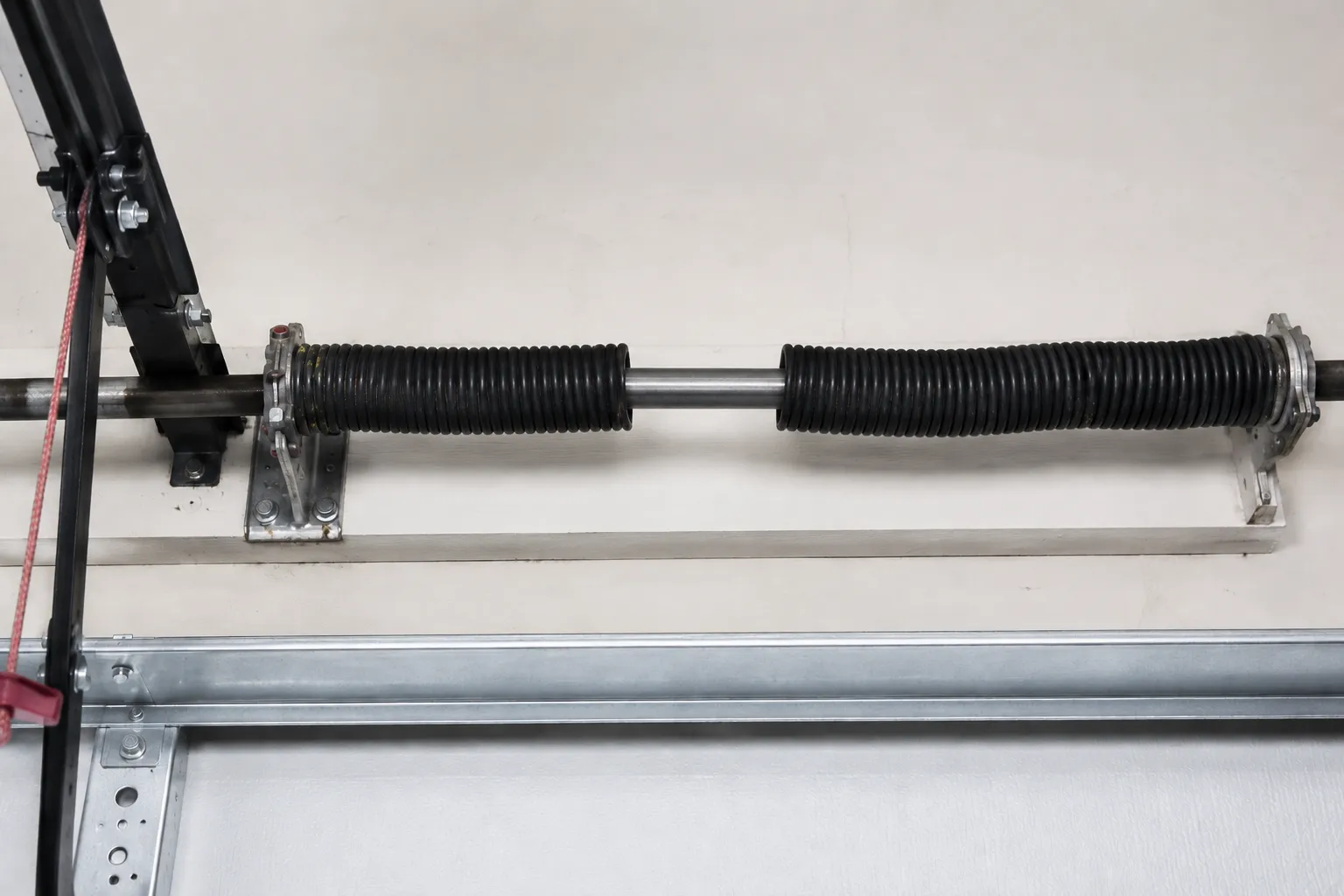
Torsion springs are mounted horizontally above the garage door opening. They work by winding and unwinding as the door moves, storing and releasing torque. Most modern residential garage doors use torsion springs because they last longer, provide more balanced lifting, and are generally safer when they break. A broken torsion spring will usually snap in place rather than flying off the wall. You can typically identify them by the metal rod that runs through the spring above the door.
Extension Springs
Extension springs run along the upper horizontal tracks on each side of the door. They stretch and contract to provide lift. Older homes and lighter doors are more likely to have extension springs. They tend to have a shorter lifespan than torsion springs and can be more dangerous if they break without a safety cable in place. If your door has springs on the sides rather than across the top, you have extension springs.
Warning Signs Your Garage Door Spring Is Failing
Springs rarely fail without warning. Knowing what to look for can help you catch a problem early, before it leads to a full garage door spring replacement or a safety issue.
These are the most common signs that something is wrong:
The door will not open: If the opener is running but the door is not moving, or it only lifts a few inches, a broken spring is often the cause. The opener is not designed to carry the full weight of the door on its own.
A loud bang from the garage: A spring breaking under tension sounds like a firecracker or a small explosion. If you hear a sudden loud pop from the garage, especially overnight when the door has not been in use, check the springs.
The door looks uneven or crooked: If one side of the door is higher than the other when it opens, that usually points to a spring issue on one side of the system. Extension springs are especially prone to uneven wear.
The door feels unusually heavy: Try disconnecting the automatic opener and lifting the door manually. It should feel relatively light and balanced. If it feels like you are lifting dead weight, the spring tension is off.
Visible gaps or separation in the spring: You can often see a torsion spring has broken by a visible gap in the coils. The spring will look like it has a section missing in the middle or toward one end.
Slow or jerky movement: A door that moves unevenly or hesitates during operation may have a spring that is weakening but has not yet fully broken.
Springs are not the only thing that can go wrong with a garage door. For a broader look at what else to watch for, the top 10 signs you need garage door repair covers the full picture.
Why South Florida’s Climate Is Hard on Garage Door Springs
Most garage door springs are rated for a specific number of cycles. One cycle equals one full open and one full close. According to standards from the Door and Access Systems Manufacturers Association, standard springs are typically rated for around 10,000 cycles, while higher-end options can handle 20,000 or more.
That sounds like a lot until you consider how often a garage door moves in a busy household. And in South Florida, the environment accelerates wear in ways that make garage door spring replacement necessary sooner than those cycle ratings suggest.
Humidity and salt air: Coastal and near-coastal homes in Broward, Palm Beach, and Miami-Dade counties deal with high humidity year-round. Metal springs absorb moisture, which leads to rust and corrosion. Rust weakens the coils and causes them to snap earlier than their rated cycle count would suggest. Salt air, especially for homes within a few miles of the ocean, speeds this process up significantly.
Temperature cycling: South Florida does not get the harsh winters that destroy springs up north, but it does have dramatic swings between air-conditioned interiors and outdoor heat. Metal expands and contracts with temperature changes. Over time, that movement contributes to metal fatigue.
Year-round use: Homeowners in colder climates sometimes park outside during mild months and use the garage primarily in winter. In Florida, the garage is used year-round, which means the springs are always working. More use equals faster wear.
Storm season stress: During hurricane season, doors get extra use as homeowners check and secure them more frequently. That increased cycle count adds up.
How Long Do Garage Door Springs Last in Florida?
A standard spring rated for 10,000 cycles will last roughly 7 to 9 years for a household that uses the garage twice a day. Upgrade to a 20,000-cycle spring and you are looking at 14 to 18 years under similar conditions. In South Florida, those estimates should be adjusted slightly downward due to the humidity and environmental factors mentioned above.
If your home is close to the water, or if you have noticed rust on other metal parts of the door system, it is worth upgrading to higher-cycle springs when you schedule garage door spring replacement. The price difference is modest compared to the cost of an earlier-than-expected second service call.
Regular garage door maintenance can also extend spring life. Lubricating the springs with a garage door-specific spray a few times a year reduces friction and helps prevent corrosion. This is one of the simplest things you can do to protect your system. For a full checklist of what to do and when, the 5 essential maintenance tips for garage doors is worth bookmarking.
Why You Should Not Replace Garage Door Springs Yourself
This is the part of the post where it needs to be said clearly: garage door spring replacement is not a DIY job. This is not about capability. It is about physics and the real danger of working with components that are under extreme tension.
A fully wound torsion spring stores an enormous amount of energy. If it releases suddenly during removal or installation, it can cause severe injury. Spring-related injuries include broken bones, lacerations, and in serious cases, worse.
Professional technicians have the tools, experience, and training to handle garage door spring replacement safely. They also know how to correctly set the tension so the door operates properly after the work is done.
Extension springs present similar risks, and they should always have safety cables running through them. If yours do not, a technician can add them during the replacement visit.
Beyond safety, an incorrectly installed spring can put excess stress on your opener, damage the cables and drums, or cause the door to operate unevenly, which leads to additional problems down the road. The repair savings from a DIY attempt rarely outweigh the potential costs.
What Professional Garage Door Spring Replacement Looks Like
When a technician comes out for a spring replacement, here is what typically happens:
Inspection first: A good technician does not just swap the spring and leave. They check the cables, drums, rollers, and opener to make sure nothing else was damaged when the spring failed or is on the verge of failure. This is especially important in South Florida because corrosion can affect multiple components at the same time.
Correct sizing: Springs are not one-size-fits-all. They are matched to the weight, height, and track configuration of your specific door. Using the wrong spring can cause operational issues and premature failure.
Replacing in pairs: If you have two torsion springs and one breaks, most technicians will recommend replacing both at the same time. The second spring has the same wear history as the one that just broke. Replacing only the failed spring often means another service call a few months later when the second one goes.
Tension adjustment: After the new springs are installed, the tension has to be set correctly so the door opens and closes at the right speed and stops at the right position. This step requires specific tools and expertise.
Operational test: The technician should run the door through several cycles, check the balance by hand, and confirm the opener is engaging and disengaging correctly before wrapping up.
How Much Does Garage Door Spring Replacement Cost?
Garage door spring replacement is typically one of the more affordable repairs you can have done on a garage door system. A single torsion spring replacement, including labor, generally falls in the range of $150 to $300. Replacing both springs on a double-spring system runs higher. Extension spring replacement tends to be on the lower end of that range. Upgrading to higher-cycle springs adds a modest cost but is worth it for longevity in the Florida climate.
Exact pricing depends on the type and size of spring, whether other components need attention, and how soon you need service. For a clear picture of what to expect, check out the Door Doctor pricing page or request an estimate. If a larger repair or full door replacement ends up being the better option, financing options are available to make that easier to manage.
One thing worth noting: putting off a spring replacement does not make the problem cheaper. A failing spring puts strain on the opener motor, cables, and other hardware. The longer it runs in that condition, the more components can be affected.
Frequently Asked Questions
How do I know if my garage door spring is broken?
The most obvious sign that garage door spring replacement is needed is a door that will not open or only opens a few inches. You may also hear a loud bang before the door stops working, or see a visible gap in the spring coils when you look above the door. If the door feels extremely heavy when you try to lift it manually, that is another strong indicator.
Can I use my garage door with a broken spring?
It is not recommended. Forcing the opener to operate without spring support can burn out the motor and damage the cables. If you need to get your car in or out before a technician arrives, you can manually disengage the opener and carefully lift the door by hand.
Do not operate it with the automatic opener until garage door spring replacement is complete. A broken spring typically qualifies as an emergency call. See what counts as an emergency garage door repair to know when to call right away.
How long does garage door spring replacement take?
For a standard replacement, most technicians can complete the job in one to two hours. If additional repairs are needed or if access is difficult, it may take a bit longer.
Does my garage door have one spring or two?
It depends on the door size and system. Single-car doors often have one torsion spring. Double-car doors usually have two. Some systems use extension springs on both sides regardless of door size. A technician can confirm your setup during the service visit.
Does homeowner’s insurance cover garage door spring replacement?
In most cases, no. Spring replacement is considered normal wear and tear, which standard homeowner’s insurance policies typically do not cover. Coverage may apply if the spring failure was caused by a covered event like storm damage. Check your policy or contact your insurance provider for specifics.
Let The Door Doctor Solve Your Problems
A broken spring does not have to mean a broken day. The Door Doctor has been serving South Florida homeowners since 1981, and garage door spring replacement is something the team handles every day. Whether you are dealing with a snapped torsion spring, an uneven door, or something that just does not sound right, a garage door repair appointment gets things back on track fast. Same-day service is available throughout the area, and the team will give you a straight answer on what your door actually needs before any work begins.
Contact The Door Doctor today to schedule a service call or get an estimate.