
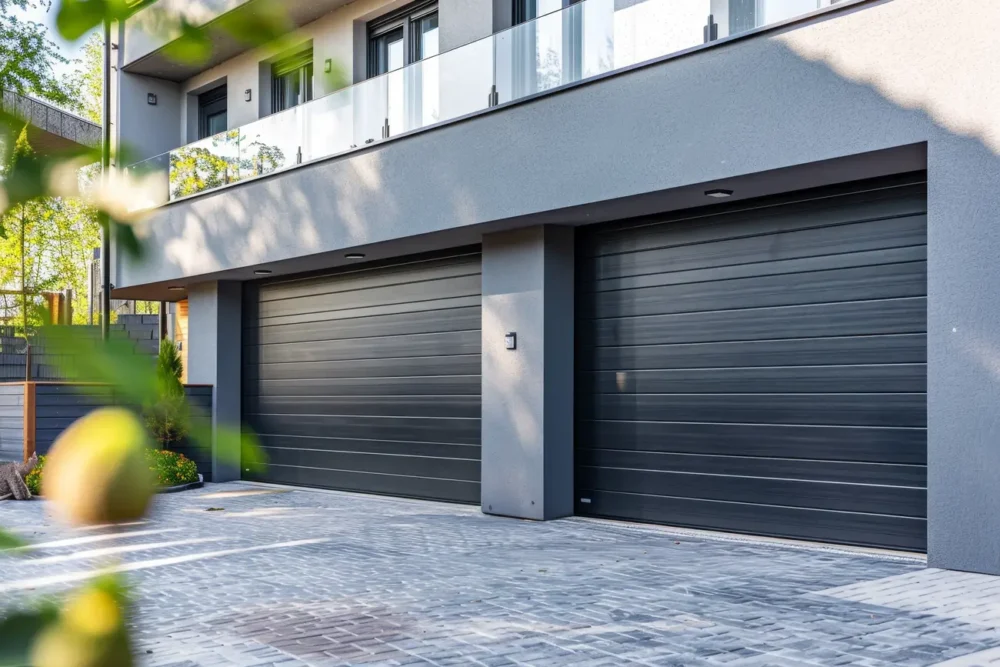
When you’re shopping for a new garage door, one of the first choices you’ll face is whether to go insulated or not. The insulated vs non-insulated garage door decision affects more than just temperature, it influences noise, durability, and how the door feels every time it opens. In South Florida, where heat and humidity are a constant, insulation carries real weight for many homes. But it isn’t the right call for every situation. Here’s how the two compare so you can decide which fits your home, your garage, and your budget.
What’s the Difference?
The difference comes down to construction. A non-insulated door is typically a single layer of steel, with nothing between you and the outside but that one panel. An insulated door adds a core of polyurethane or polystyrene insulation, often sandwiched between two steel layers, which slows the transfer of heat and sound.
That extra layer changes how the door performs in several ways, from how warm your garage gets to how loud the door is and how well it holds up over time. Insulated doors are usually described by their R-value, a measure of insulating performance, where a higher number means better resistance to heat flow.
The Case for Insulated Garage Doors
For many South Florida homes, an insulated door is the smarter long-term choice. The benefits go beyond temperature.
- A cooler garage: Insulation slows heat from building up inside, which keeps the space more usable and, for attached garages, reduces how much heat reaches adjoining rooms.
- Quieter operation: The layered, insulated construction dampens vibration and sound, so the door runs more quietly, a real plus if a bedroom sits above or beside the garage.
- Greater durability: Multi-layer insulated doors are sturdier and more resistant to dents than thin single-layer models.
- Energy efficiency: By reducing heat transfer into attached living space, an insulated door can ease the load on your air conditioner.
If energy efficiency is a priority for you, our post on energy-efficient garage doors goes deeper on how insulation affects comfort and cooling costs in our climate.
Why Insulation Matters More in South Florida
Our long, hot season means a garage can turn into an oven for much of the year. An uninsulated door offers little defense against that heat, and if the garage is attached, the warmth works its way into the house. An insulated door helps keep conditions steadier, which matters more here than in a cooler, drier climate. It also tends to stand up better to year-round use and humidity.
When a Non-Insulated Door Makes Sense
Insulation isn’t essential for every home, and a non-insulated door has its place. It’s typically more affordable up front, which appeals to budget-conscious projects. For a detached garage you rarely spend time in, or a structure that isn’t connected to your living space, the comfort and energy benefits of insulation are much smaller.
A non-insulated door can also be a reasonable choice for a rental property, a workshop you don’t climate-control, or a simple storage garage where temperature and noise aren’t concerns. The key is matching the door to how you actually use the space. If the garage shares a wall or ceiling with rooms you live in, insulation is usually worth it. If it stands on its own and sees little use, a non-insulated door may be all you need.
Comparing the Two on What Matters
Here’s how insulated and non-insulated doors stack up on the factors homeowners care about most:
- Temperature control: Insulated doors keep the garage cooler; non-insulated doors offer little resistance to heat.
- Noise: Insulated doors run quieter; non-insulated doors transmit more sound and vibration.
- Durability: Multi-layer insulated doors resist dents and wear better than single-layer models.
- Upfront cost: Non-insulated doors are typically less expensive to start.
- Best fit: Insulated suits attached garages and living-adjacent spaces; non-insulated suits detached or low-use garages.
You can compare construction and insulation options across styles in our garage door selection to see what fits your home.
Which Door Is Right for Your Home?
Start with how your garage is used. If it’s attached, shares space with a bedroom or living area, or doubles as a workspace, gym, or laundry room, an insulated door is usually the better investment for comfort and quiet. Styles like a classic traditional steel garage door are available in insulated, multi-layer versions that balance looks with performance.
If your garage is detached, used mainly for storage, or part of a budget-focused project where temperature and noise don’t matter, a non-insulated door can do the job for less. There’s no universal right answer, just the one that fits your home and how you live in it. A professional can help you weigh the trade-offs against your specific garage and goals.
When to Talk to a Professional
Choosing the right insulation level, construction, and style is easier with expert guidance, and installation is work for a trained team no matter which door you choose. A garage door has to be properly sized and balanced, and the springs and hardware involved are under high tension and not safe for DIY work.
Our experienced installers can walk you through the insulated-versus-non-insulated decision, recommend options suited to your garage and how you use it, and handle the full installation. If you’re planning a new door, we can assess your home and provide a clear estimate.
Frequently Asked Questions
Is an insulated garage door worth it in South Florida?
For most attached garages here, yes. Our long, hot season means an insulated door helps keep the garage cooler, eases the load on your AC for adjoining rooms, and runs more quietly. For a detached or low-use garage, the benefits are smaller and a non-insulated door may be enough.
Does an insulated garage door really reduce noise?
Yes. The multi-layer, insulated construction dampens vibration and sound, so the door operates more quietly than a single-layer model. This is especially worthwhile if a bedroom, office, or living space sits above or next to the garage.
Are non-insulated garage doors a bad choice?
Not at all. A non-insulated door is a reasonable, budget-friendly option for detached garages, storage spaces, workshops, or rental properties where temperature and noise aren’t priorities. The best choice depends on how you use the garage and whether it connects to your living space.
What R-value should I look for in an insulated door?
A higher R-value means better insulation, but the right level depends on your home and how the garage is used. An attached garage or one near living space generally benefits from a higher R-value. A professional can help you match the insulation to your situation.
Ready to Choose the Right Garage Door?
Whether you need the comfort and quiet of an insulated door or a simpler non-insulated option, the choice comes down to your garage and how you use it. The Door Doctor of South Florida can help you compare your options, recommend the right door, and install it correctly. Request a free estimate and we’ll help you find the best fit.